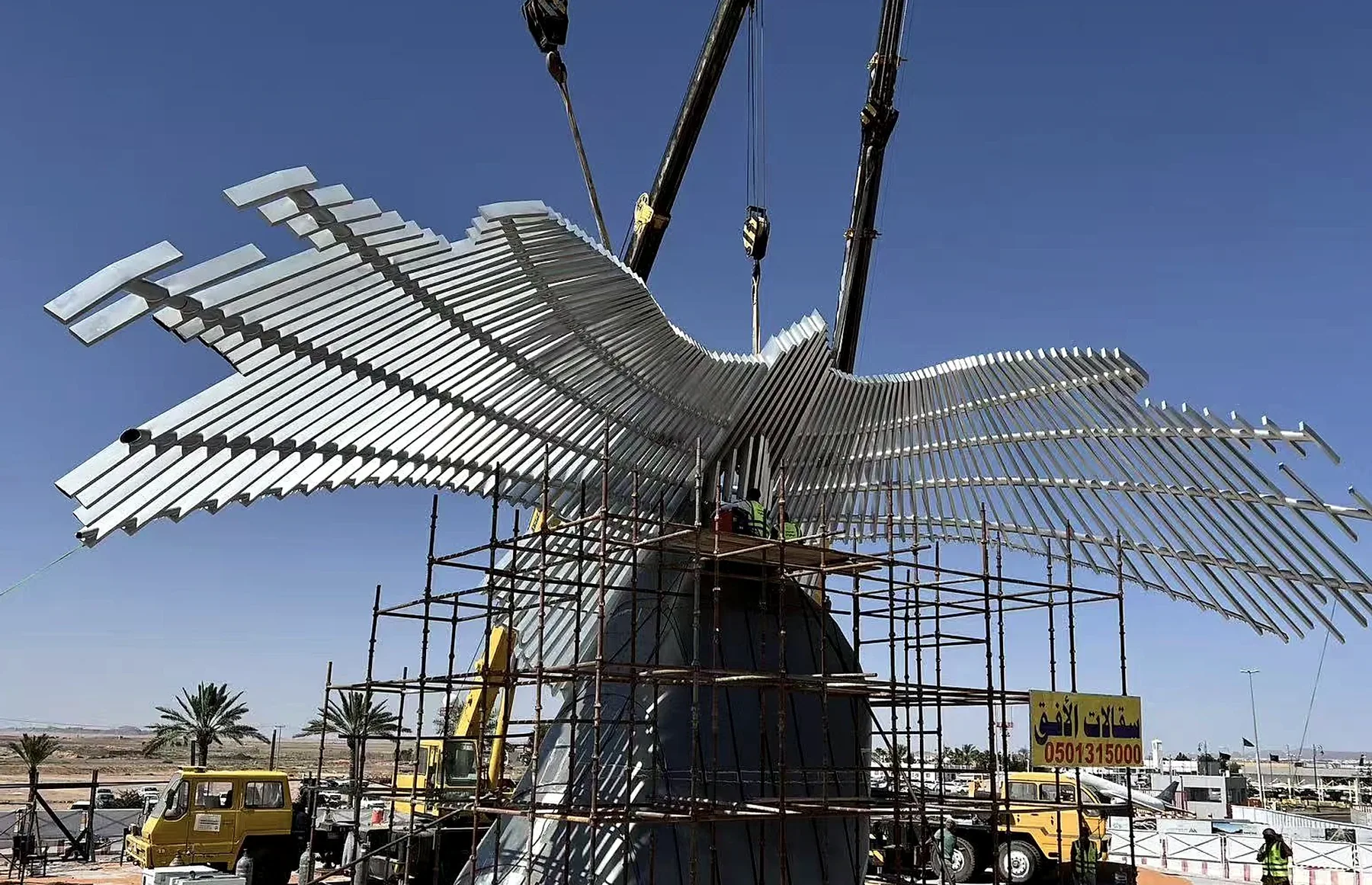
A reflective surface.
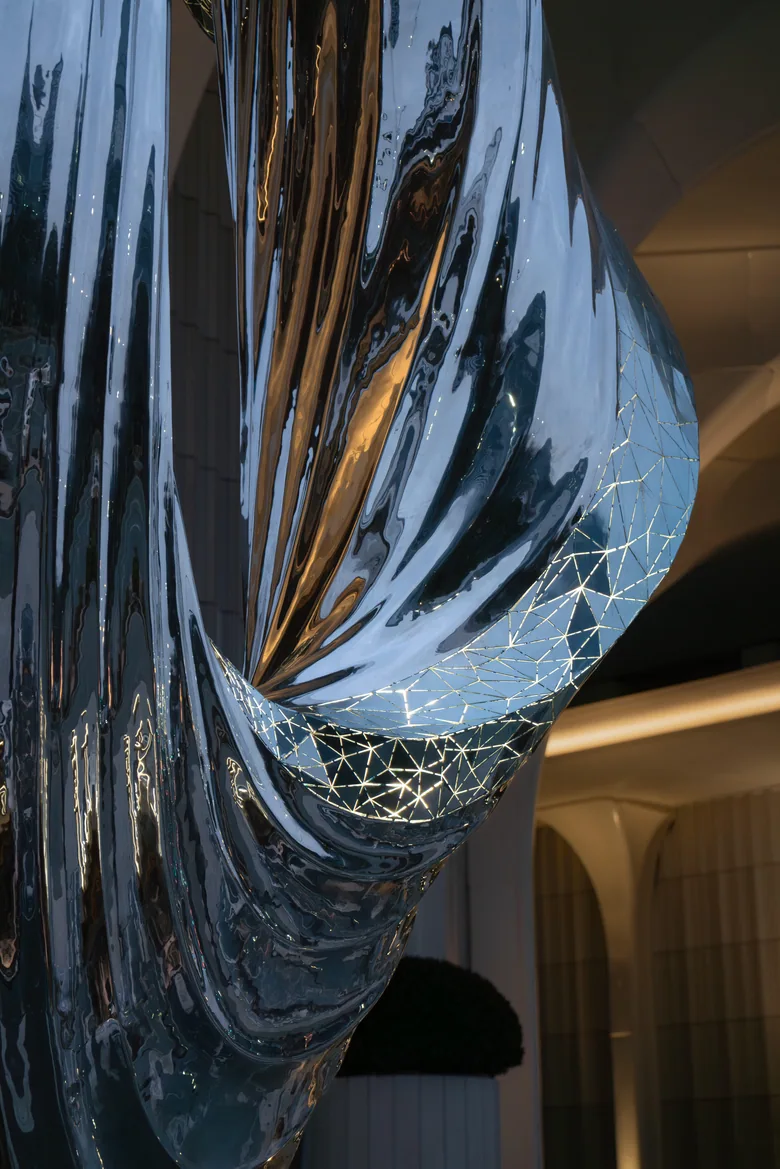
A curved face picks up the canopy, sky and people around it. Compare a finish sample outside in the direction of the main approach, with one photograph from close up and one from across the site.
A dark reflection, a bright edge or a glow behind metal can change what you see from the street. Compare the effect you want before specifying the material and light.
A curved face picks up the canopy, sky and people around it. Compare a finish sample outside in the direction of the main approach, with one photograph from close up and one from across the site.
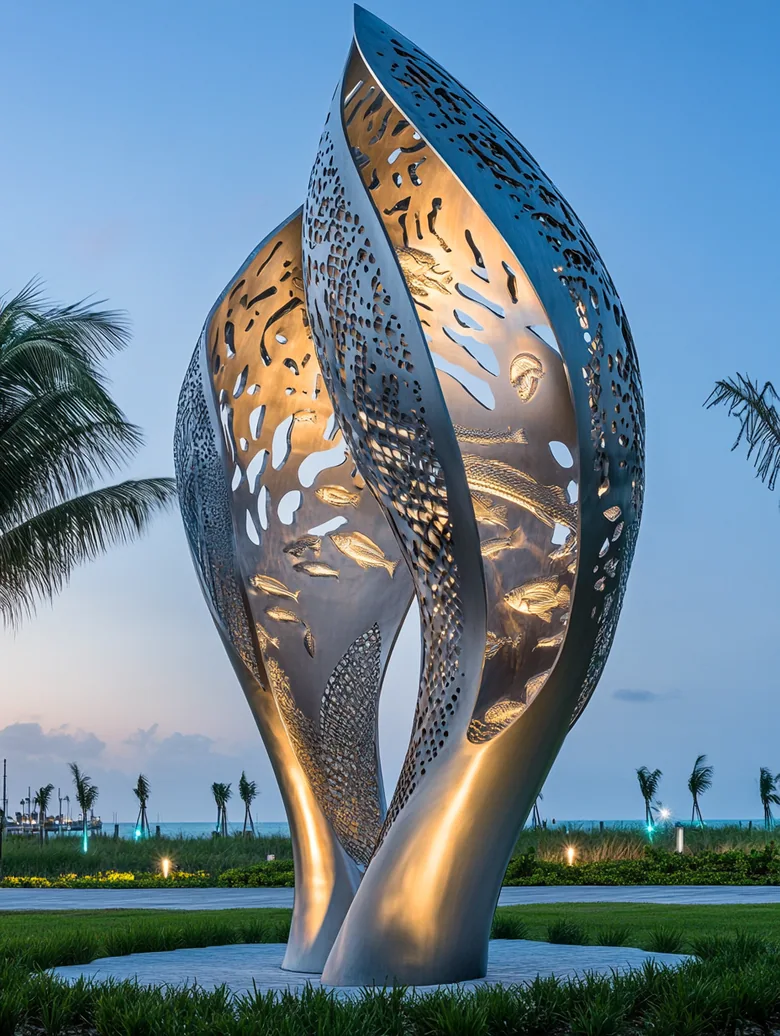
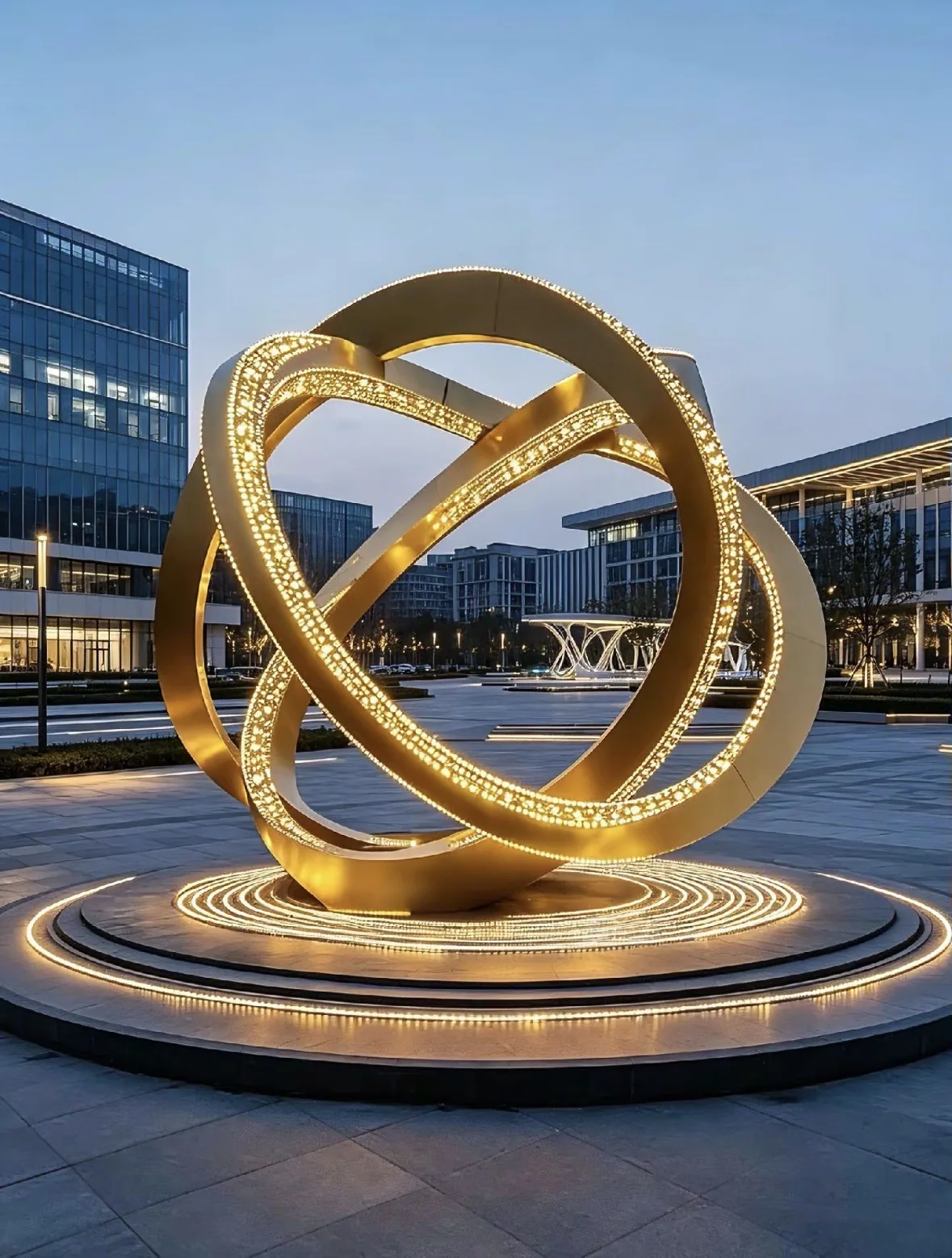
Light behind a perforated panel reveals small cutouts at dusk. Mark the openings that should glow and how the lighting team will reach the fixtures after installation.
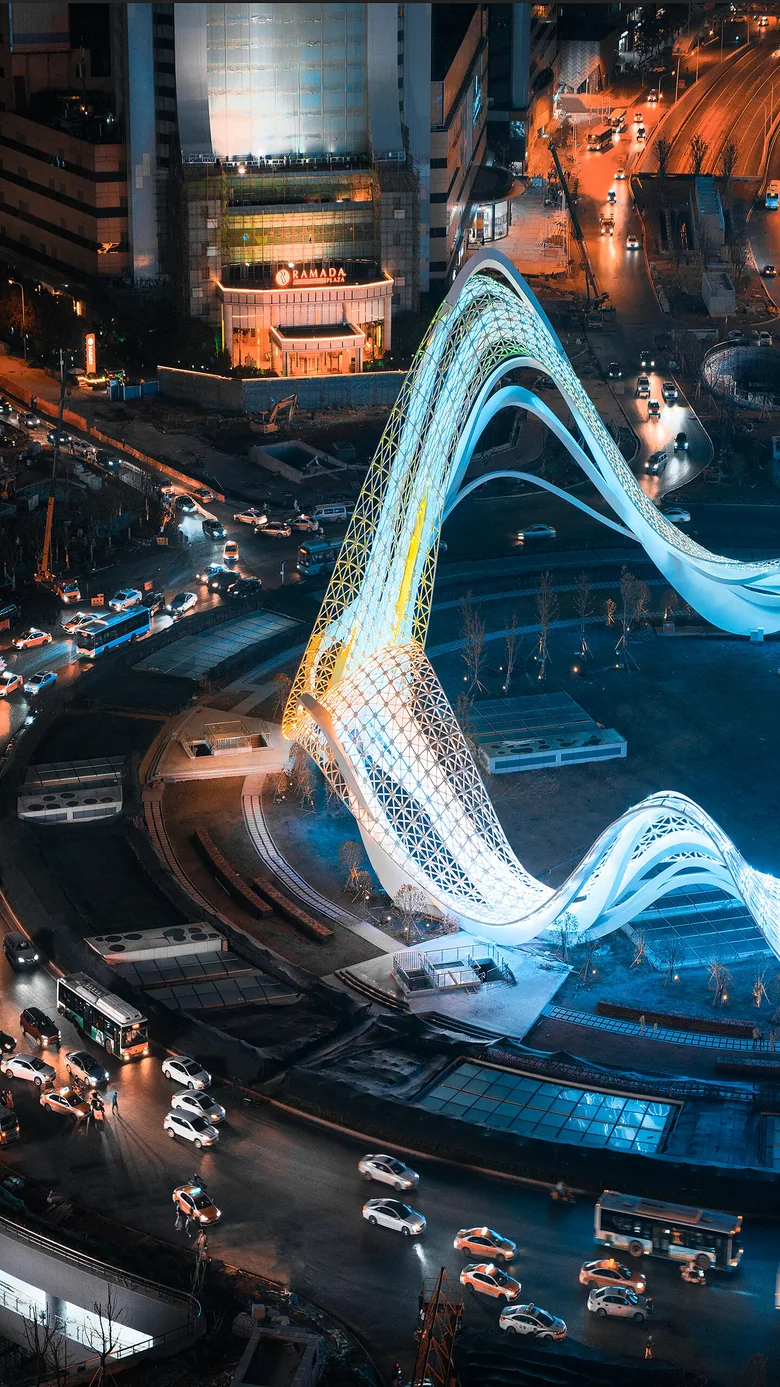
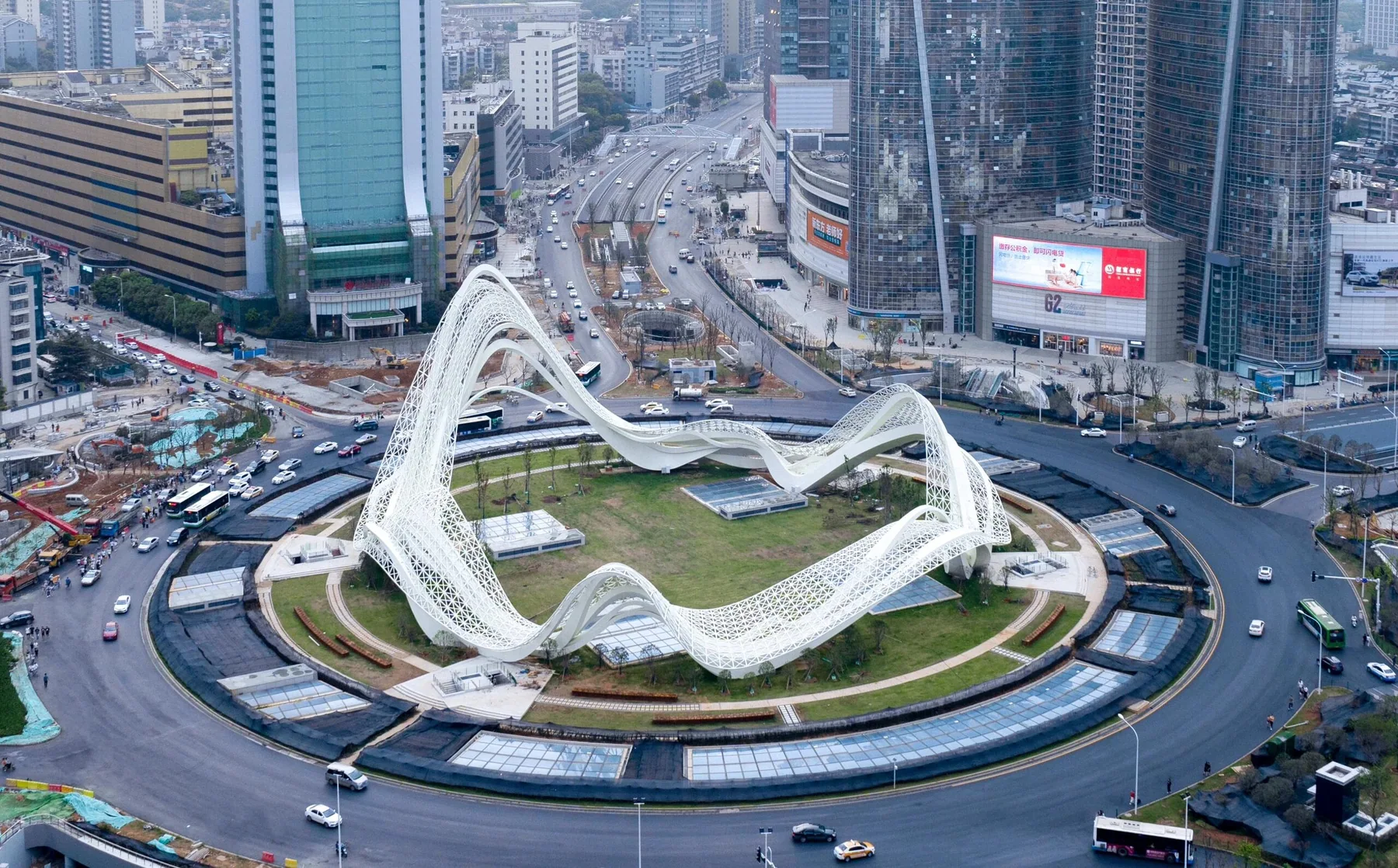
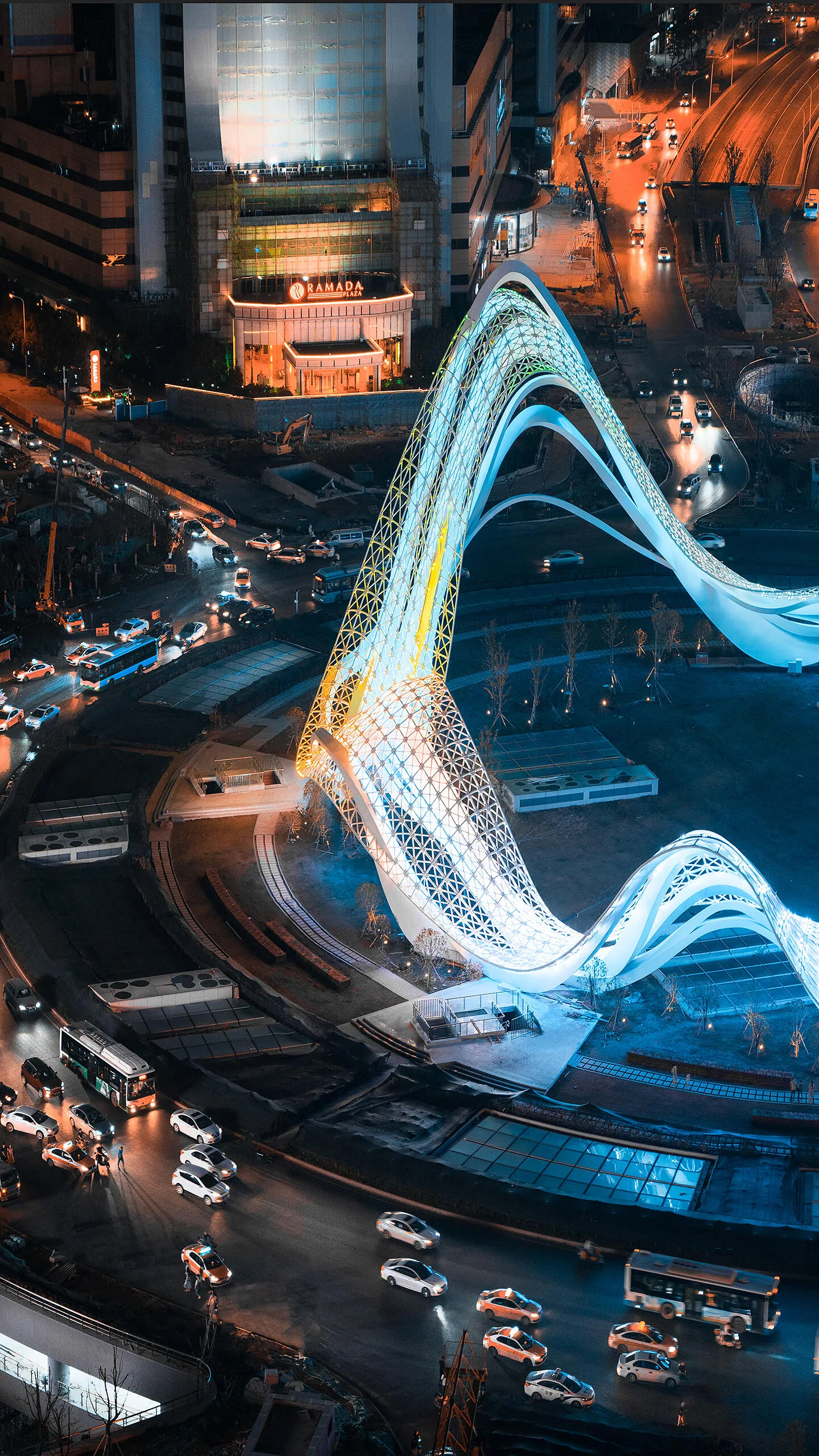
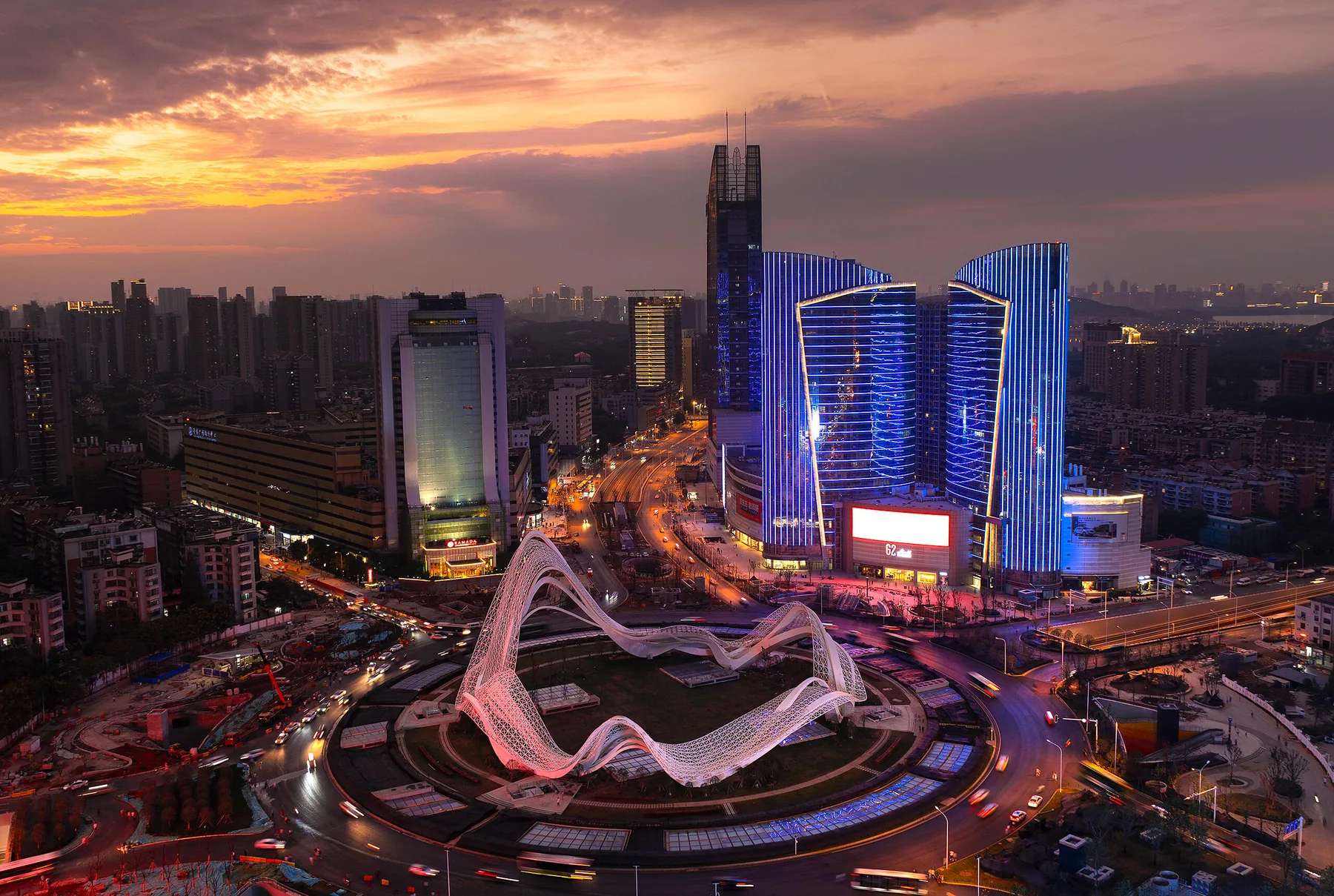
The night photograph of the wave shows a bright line tracing a crest above the road. Ask for a lighting view against the surrounding buildings so you can judge which part of the form remains legible.
Finish samples
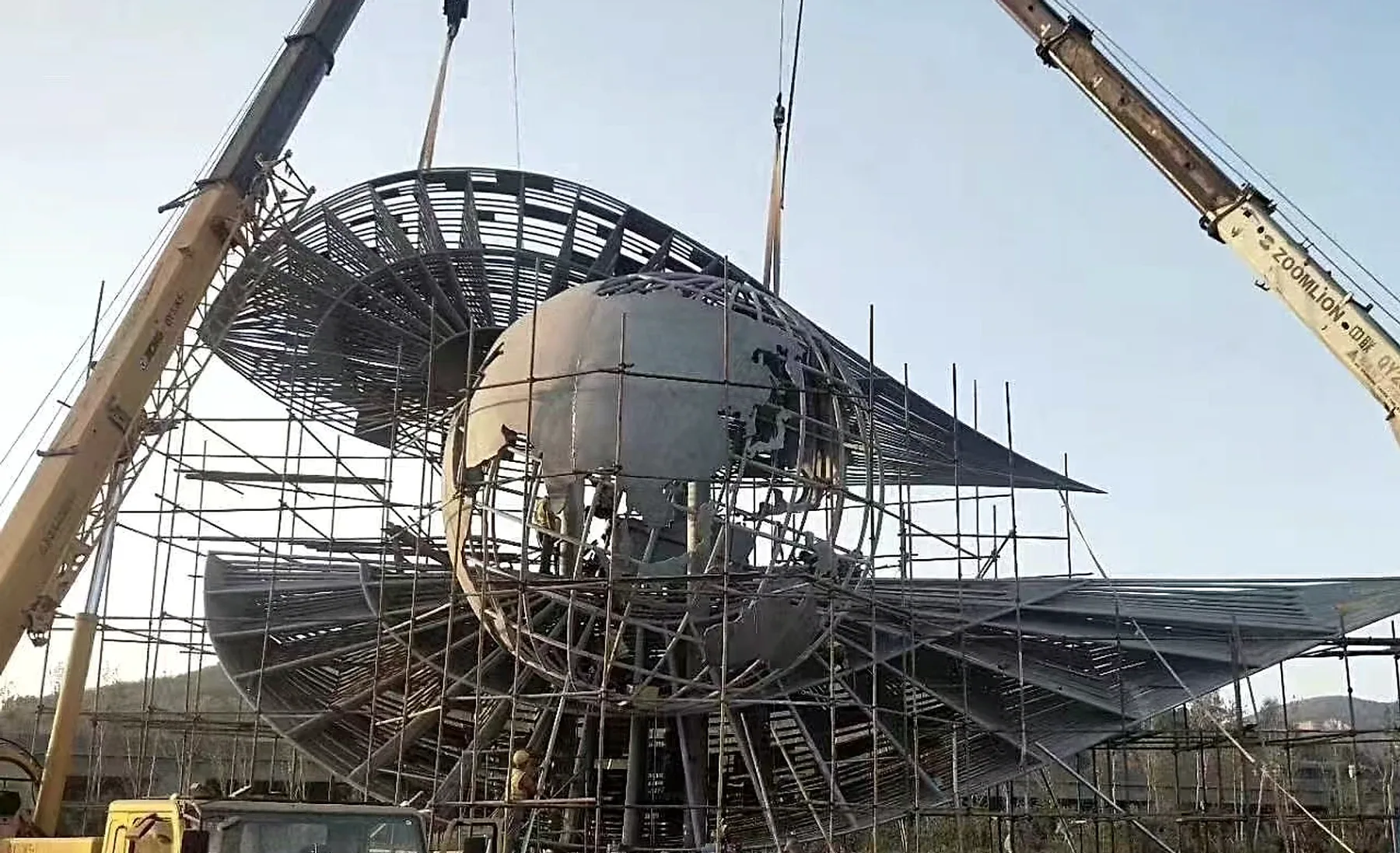
Look at one physical sample in sun and shade, then beside the proposed lighting. Record the surface direction and gloss. Share the site’s exposure and maintenance conditions so the material grade can be agreed for the commission.
Prepare a lighting briefProject enquiries
Where will the sculpture stand, and from which street should it be seen first? Send a marked plan, an approximate size and the delivery city.